More
Space and astronomy
From the age of seven, I was fascinated by astronomy and space flight.
As a teenager, I did an internship at the Max Planck Institute for Radio Astronomy in the 'mm' laboratories. They actually wanted to send me to Chile, where a new ESA telescope was being built. But there were delays.
Only my contact with computers shifted my focus. Nevertheless, I am still very interested in both fields.
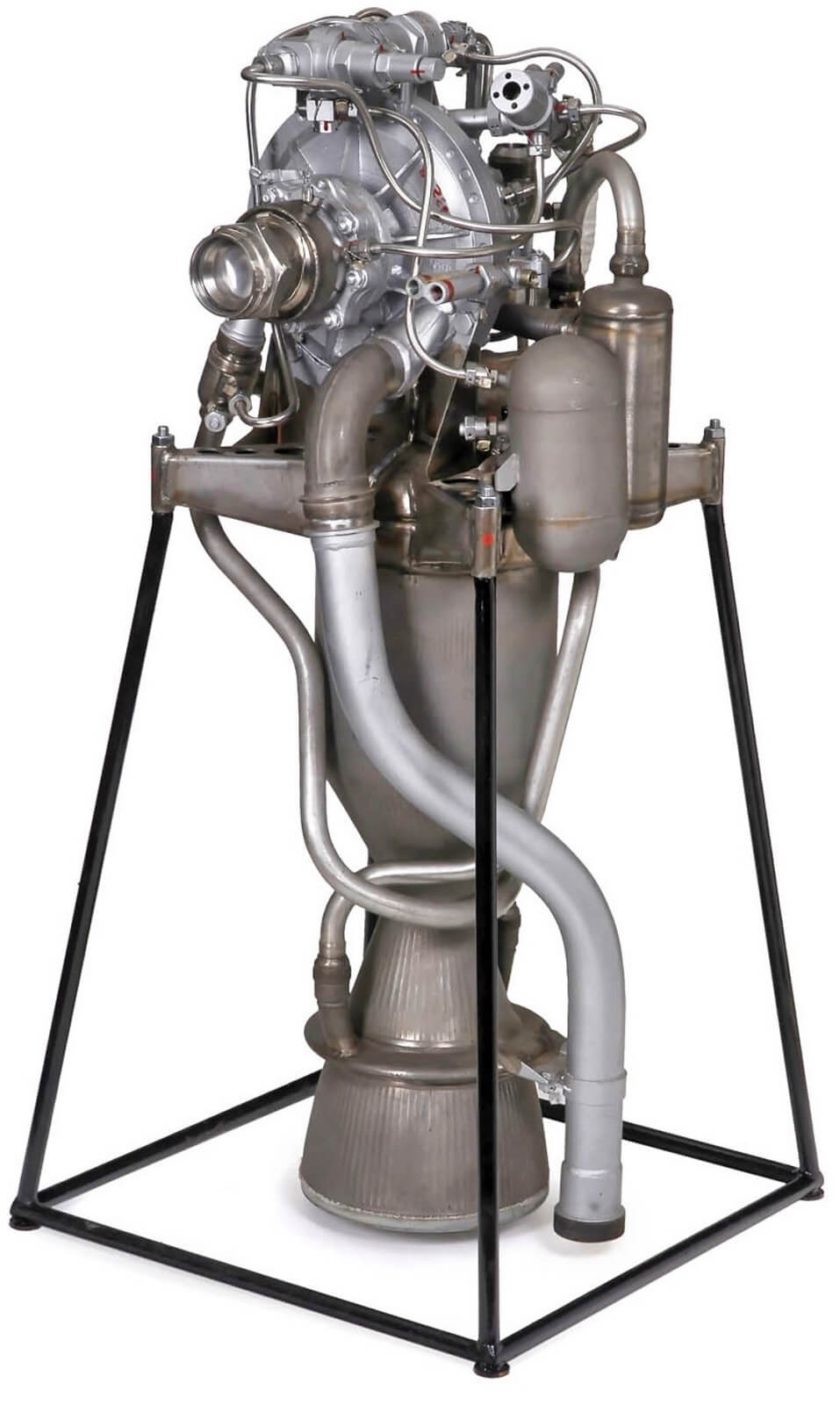
I have many collectible objects in my possession, including artefacts from the remarkable Apollo and Space Shuttle missions. A few years ago, I had the chance to buy the mighty Kholod Rocket. The owner contacted me, but where to put such a gigantic piece? It would have been very conspicuous on private property, and the neighbours certainly would not have liked it. Now I am hoping to find smaller rockets or jet engines that I like.
NASA Simulator (1964)
 +
NASA Simulator
+
NASA Simulator
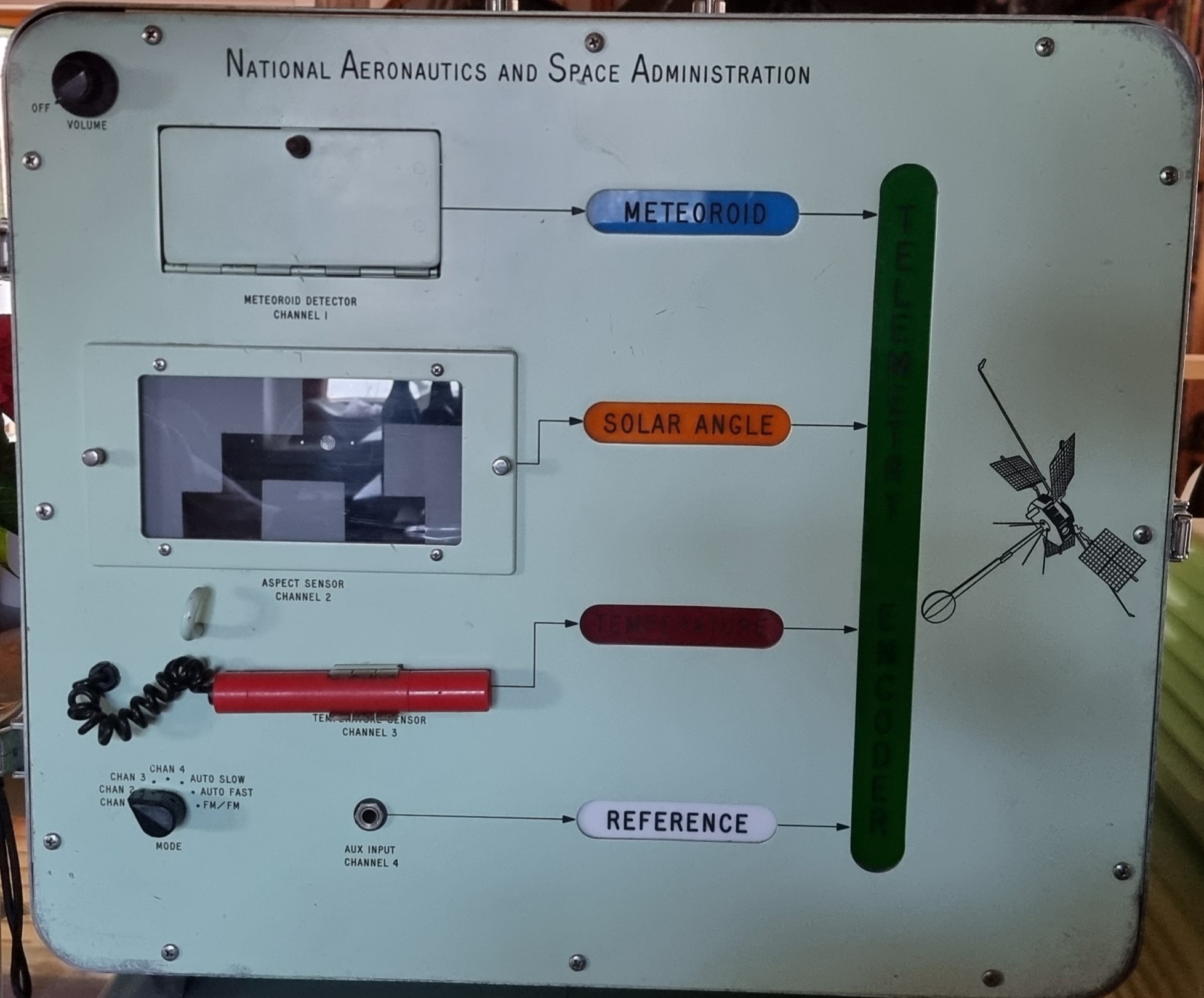
A simulator for testing the NASA Explorer 21 (IMP B, IMP 2, S 74a). A wonderful piece of history.
Wikipedia
Explorer 21, officially known as IMP-B (Interplanetary Monitoring Platform B), was one of NASA’s early scientific satellites designed to study the space environment around Earth and in the region between Earth and the Moon. Launched on October 4, 1964, Explorer 21 was part of the long-running Explorer program, which began in 1958 and continues to contribute to space science today.
Explorer 21’s main goal was to investigate the conditions in near-Earth space and the interplanetary medium. The satellite carried instruments that measured charged particles, cosmic rays, solar wind ions, plasma characteristics, and magnetic fields. These measurements were important for understanding how the Sun affects Earth’s magnetosphere and how space weather can influence satellites and astronauts.
The spacecraft was launched using a Thor-Delta C rocket from Cape Canaveral. Its planned orbit was highly elliptical, allowing it to travel far from Earth to observe changes in the space environment at different distances. However, a malfunction during the launch caused the satellite to reach only about half of its intended distance from Earth. This limited the regions it could study but did not stop the mission from collecting valuable data.
Explorer 21 was built by NASA’s Goddard Space Flight Center. It weighed about 138 kilograms and used four solar panels to generate power for its scientific instruments. The satellite also had batteries, but after about two months in space, the batteries overheated due to the spacecraft’s unexpected orientation to the Sun. The high temperatures damaged the batteries, so Explorer 21 could only operate when its solar panels were directly exposed to sunlight.
Despite these challenges, the mission succeeded in providing important data. For nearly five months, Explorer 21 sent back information about the particles and magnetic fields in Earth’s magnetosphere. Scientists used these results to better understand how the solar wind interacts with Earth’s protective magnetic field and how cosmic rays behave in space near our planet.
Explorer 21 stopped transmitting data in October 1965, and its orbit eventually decayed, with the satellite re-entering Earth’s atmosphere in January 1966. Although its mission duration was shorter than planned, Explorer 21 played an important role in space science. It was part of the early Interplanetary Monitoring Platform series, which helped develop better methods for measuring space weather and protecting future spacecraft from radiation and other hazards.
The lessons learned from Explorer 21 led to improvements in later satellites, including better thermal protection and more reliable power systems. Its contribution helped lay the foundation for many modern space missions that study the Sun, the solar wind, and how these forces affect Earth.
Explorer 21 remains an important step in NASA’s history, showing how even early and sometimes imperfect missions can provide valuable knowledge and inspire future exploration.
NASA Viking Spacecraft Simulator (1974)
 +
NASA Viking Spacecraft Simulator
+
NASA Viking Spacecraft Simulator
 +
NASA Viking Spacecraft Simulator
+
NASA Viking Spacecraft Simulator
 +
NASA Viking Spacecraft Simulator
+
NASA Viking Spacecraft Simulator
 +
NASA Viking Spacecraft Simulator
+
NASA Viking Spacecraft Simulator
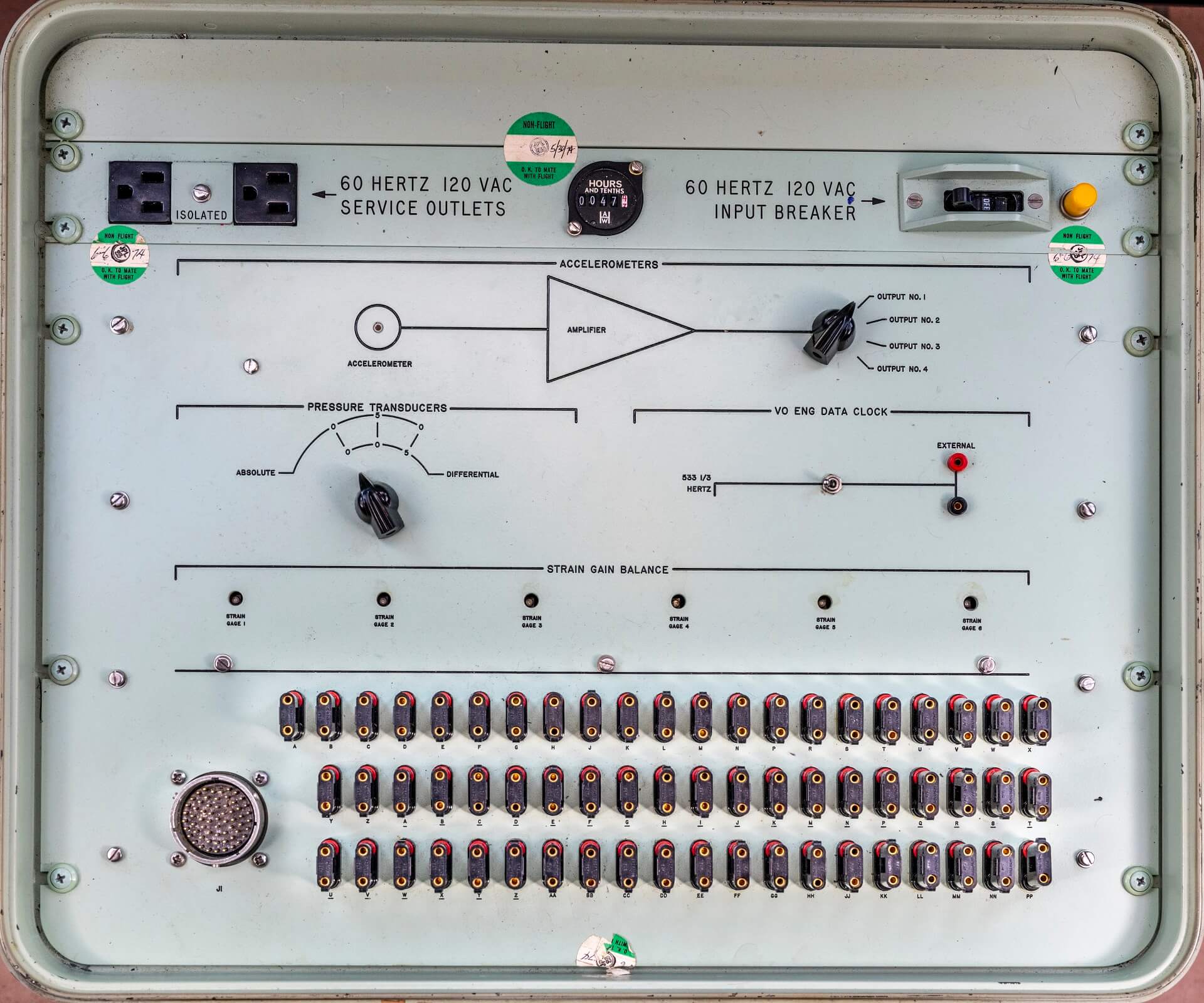
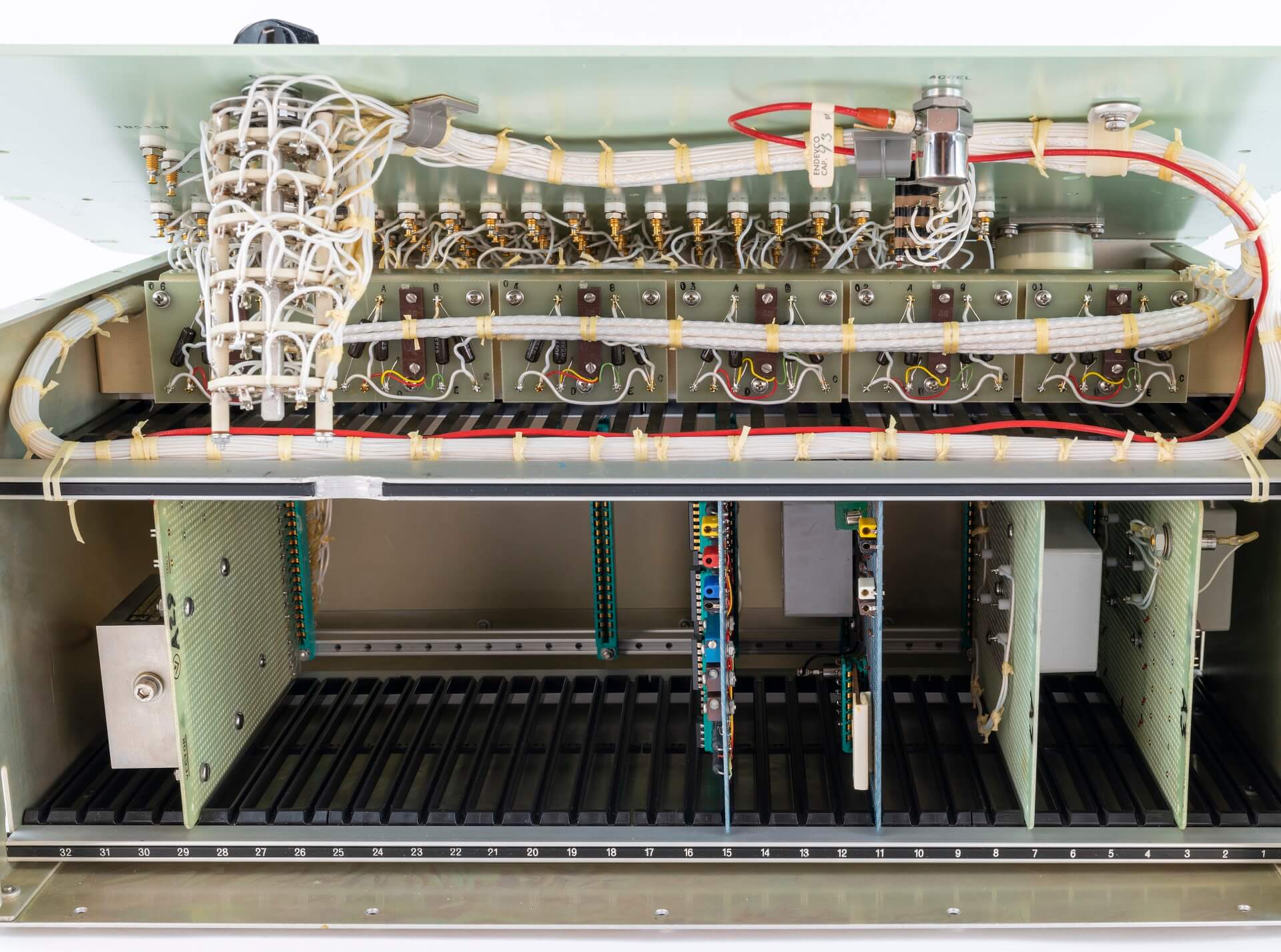
This NASA Viking Spacecraft Simulator has the serial number 1 and is most likely the only existing example from 1974.
The NASA Viking Spacecraft Simulator recreates the operations of the Viking spacecraft, which were the first American missions to successfully land on Mars. Developed to assist with mission planning and training, the simulator offers a virtual experience that helps users understand how the Viking spacecraft functioned during their historic exploration of the Red Planet.
The Viking program launched two spacecraft, Viking 1 and Viking 2, each consisting of an orbiter and a lander. These missions launched in 1975 and made their groundbreaking landings on Mars in 1976. Their primary goals were to study the Martian atmosphere and surface while searching for signs of life. The Viking landers sent back the first detailed images and scientific data from the Martian surface, greatly advancing our knowledge of the planet.
The simulator was created to train mission operators by allowing them to practice commanding the spacecraft in a controlled environment before and during the mission. It also helped test landing sequences and surface operations to ensure mission procedures were well-planned and reliable. Beyond its practical use for NASA, the simulator serves as an educational tool that provides students and researchers with insight into spacecraft systems and Mars exploration challenges.
Users of the simulator can interact with realistic models of the lander’s instruments, communication systems, and power supplies. The program includes a representation of Mars’ environmental conditions to create authentic scenarios for landing and surface activities. By following the mission timeline, users can experience the sequence of events from launch through landing and surface exploration. The simulator also allows users to test various scenarios, including potential equipment malfunctions or environmental hazards, to practice responding to unexpected situations.
The NASA Viking Spacecraft Simulator played a vital role in ensuring the success of the Viking missions by helping prepare operators and refining mission protocols. It also laid the foundation for the use of virtual simulations in future planetary exploration missions. Today, the simulator continues to inspire visitors, students, and space enthusiasts by offering a glimpse into the complex and exciting world of space exploration.
Other space telated items
Over the years, I have collected many space related items, including meteorites and other fascinating objects. One example is the famous Muonionalusta meteorite, admired for its striking Widmanstätten patterns.
Miscellaneous
Maybe I will later add more about what I like and collect else.
Artist JACE
On the island of La Réunion, I first encountered the works of the artist JACE. He created the faceless yellow figure called Gouzou. I like many of his works very much, and many others feel the same way. Even at the airport security area on the island, he was allowed to paint a mural on the wall.
In 2024, I contacted JACE and asked whether he would accept commissioned work. After I told him what I had in mind, he created four designs for me.
 +
Famous JACE from La Réunion made this painting for me
+
Famous JACE from La Réunion made this painting for me
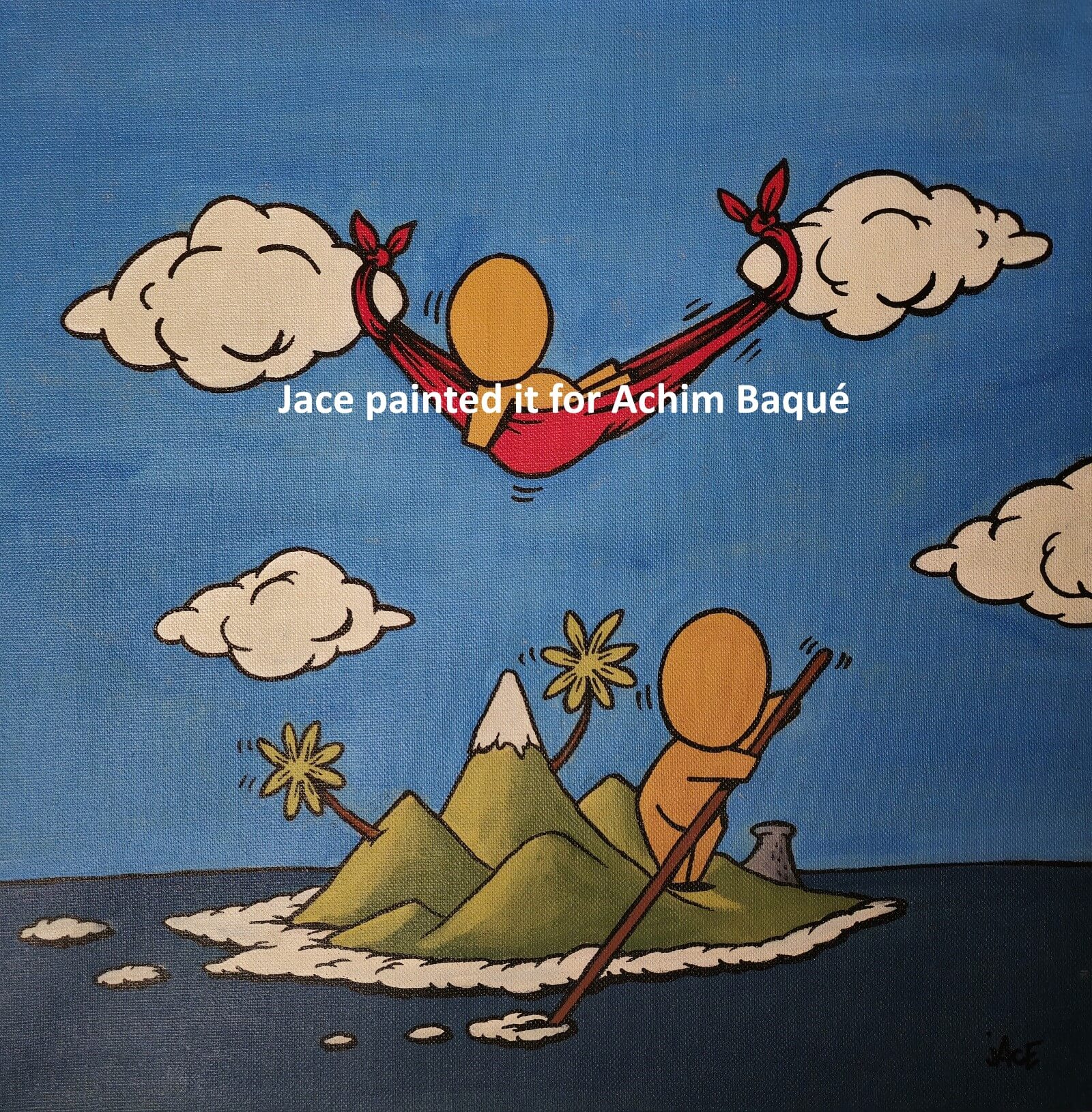 +
Famous JACE from La Réunion made this painting for me
+
Famous JACE from La Réunion made this painting for me
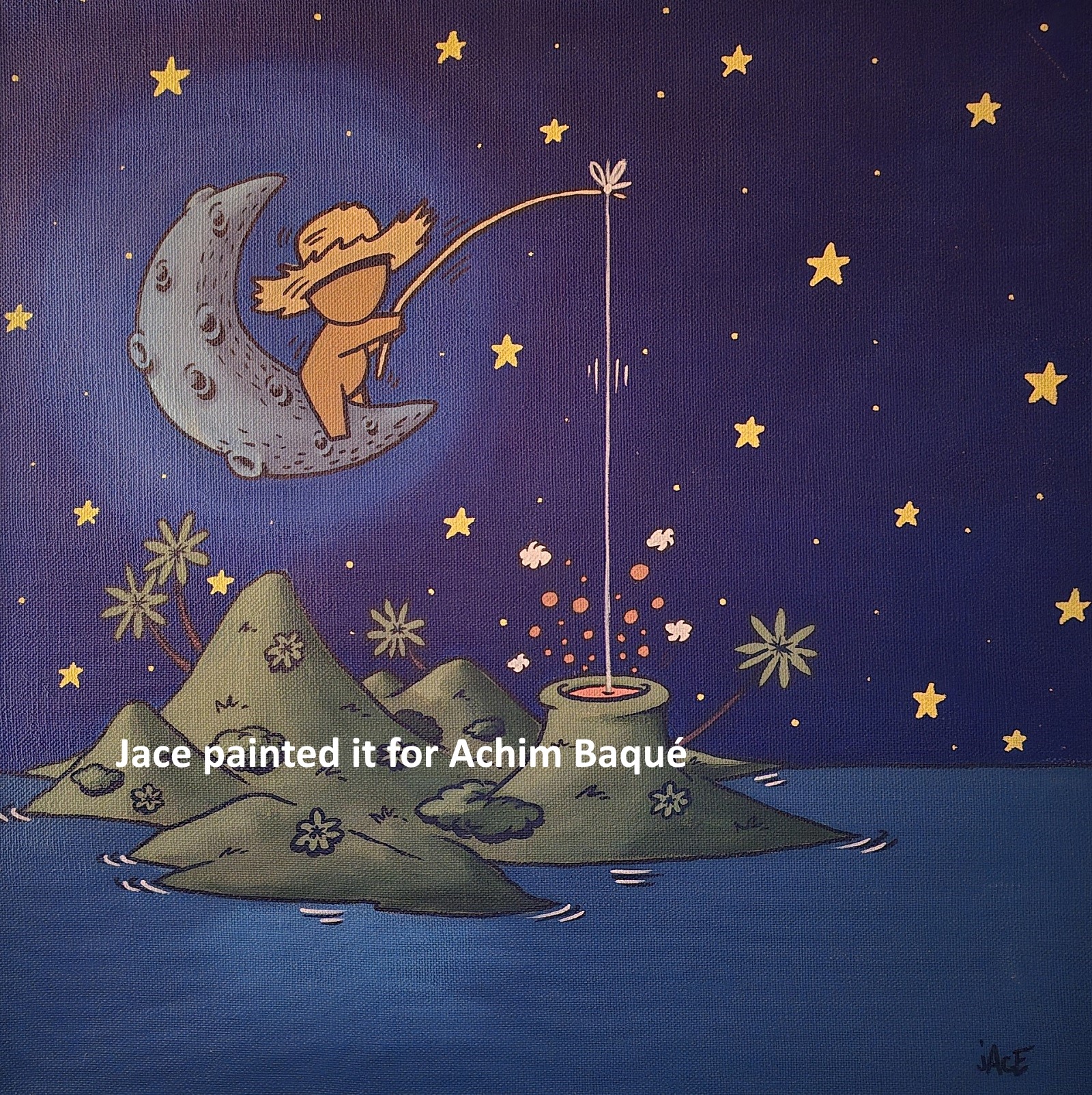 +
Famous JACE from La Réunion made this painting for me
+
Famous JACE from La Réunion made this painting for me
 +
Famous JACE from La Réunion made this painting for me
+
Famous JACE from La Réunion made this painting for me
Minerals, gemstones, and geological specimens
My collection also includes minerals, gemstones, and geological specimens. I am especially fascinated by Namibian Pietersite with strong chatoyancy, obsidians, labradorite, malachite, and similar materials. Over the years, I have been able to acquire many beautiful pieces, including several large and particularly impressive specimens.
I also enjoy collecting Muonionalusta meteorite specimens (mainly found in Sweden) with strong, well-defined Widmanstätten patterns.
Wikipedia