Micral S (1974)
The Micral S in Achim Baqué’s vintage computer collection.
Back to the Vintage Computer Collection
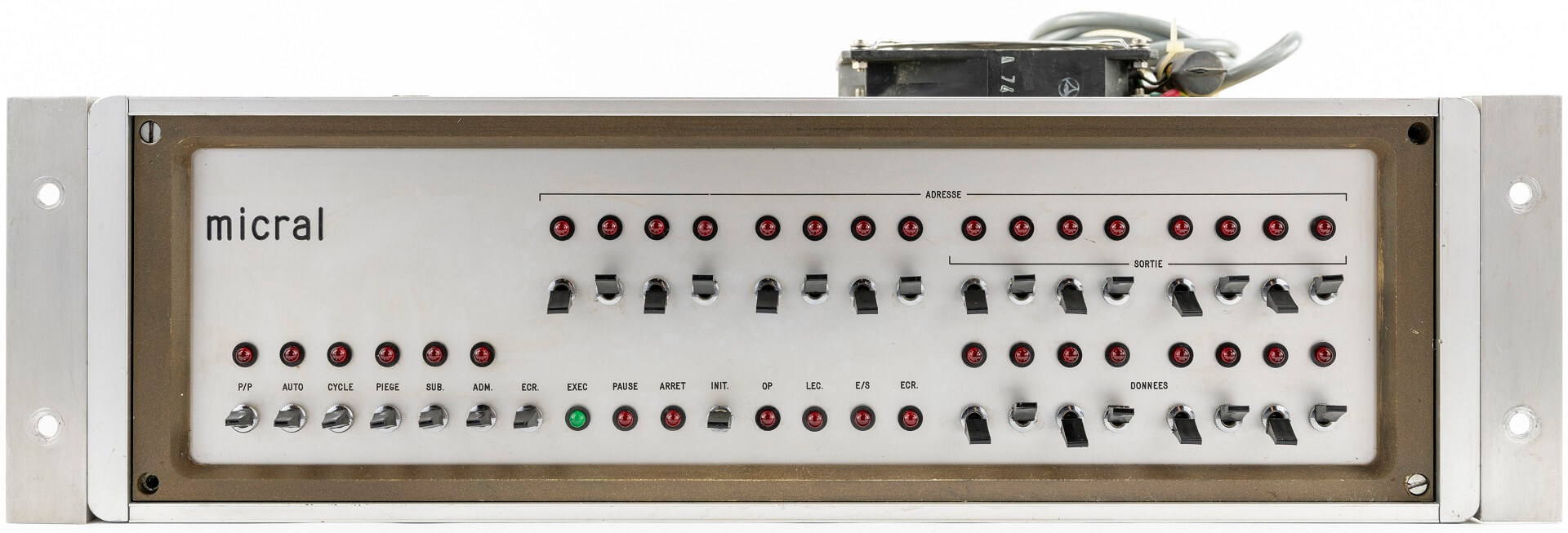
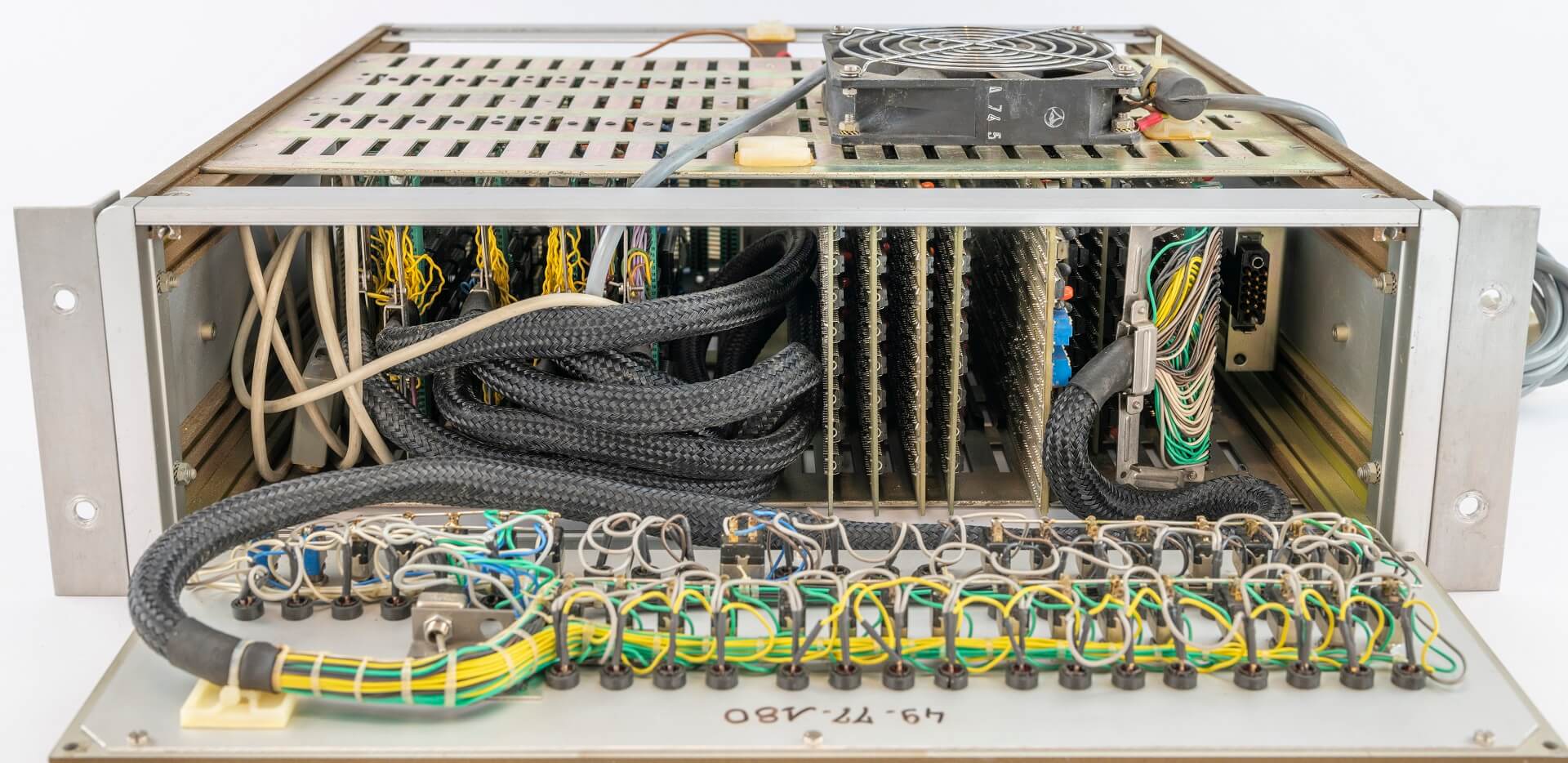
The computer comes from someone who was involved in sales and modification for customers in the 1970s. According to him, multitasking was even possible, and all the necessary cabling is still in the computer.
The Micral N and Micral S , Pioneers of the Microcomputer Age
When people talk about the birth of the personal computer, they often mention the Apple I, the Altair 8800, or the IBM PC. But long before these icons, a small French company called R2E , short for Réalisation d'Études Électroniques , quietly built some of the world’s first commercially available computers based entirely on a microprocessor. These were the Micral N and its successor, the Micral S.
The Micral N , A True First
The Micral N, introduced in 1973, holds a special place in computing history. Designed by André Truong Trong Thi and François Gernelle, it is recognised as the first commercially produced microcomputer to use a single-chip microprocessor, the Intel 8008.
Originally, the Micral N was developed for the French National Institute for Agronomic Research. It was intended to automate data collection for agricultural experiments, a task that normally required larger, more expensive minicomputers like the PDP-8. The use of the 8008 microprocessor made the Micral N far more affordable and compact than the bulky machines of the time.
Importantly, unlike later American microcomputers such as the Altair 8800, the Micral N was not a kit. It came fully assembled and ready to use, making it accessible to customers who needed a practical computing tool rather than a do-it-yourself project.
The Micral S , A Logical Evolution
Building on the success of the Micral N, R2E expanded its product line with new models, one of which was the Micral S. The S model retained the pioneering spirit of the original Micral but offered more flexibility, better performance, and a modular design that could be tailored for various industrial and scientific applications.
With the Micral S, customers could add extra memory, plug in different I/O cards, and connect peripherals according to their specific needs. This adaptability made the Micral S a valuable solution for tasks like process control, data logging, and small business computing , all at a time when computing power was still out of reach for most smaller organizations.
A Lasting Legacy
Although neither the Micral N nor the Micral S became household names like the Apple II or IBM PC, they demonstrated what was possible with the new generation of microprocessors. They proved that general-purpose computers could be small, affordable, and practical for real-world tasks.
The design ideas behind the Micral computers influenced later European and global developments in the microcomputer industry. Today, surviving Micral N and Micral S machines are rare and highly valued by collectors and museums, celebrated as key milestones in the evolution of modern computing.
In summary, the Micral N was the first to show what a microprocessor could do in a real, ready-to-use computer. The Micral S carried that vision forward, improving performance and expanding possibilities for industrial and scientific users, quietly helping shape the age of the personal computer.
Confidential contact
If you own or know of historically important computers, documentation, software, manuals, parts, photographs, provenance information or related artefacts, please contact me. Messages, photographs and provenance details are treated confidentially.