Commodore C65 (1991)
Commodore C65 (1991) in Achim Baqué’s vintage computer collection.
Back to the Vintage Computer Collection
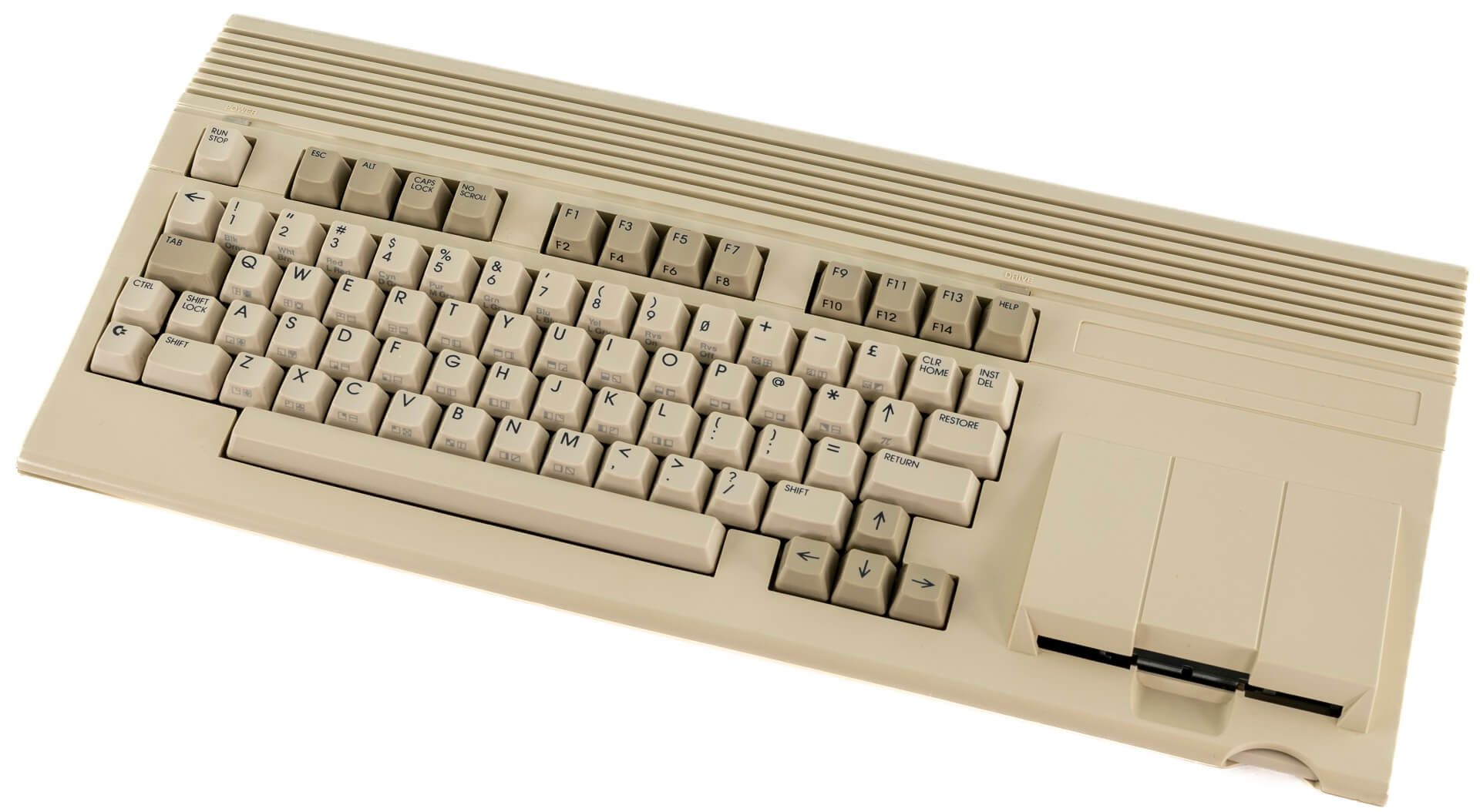
By chance I got in touch with the owner of a Commodore C65. It's actually too young a computer for my collection, but its historical significance and rarity make it very interesting.
I flew to the USA to visit other collectors and as a holiday. I had to go to Pennsylvania to pick up this computer. This was an opportunity to visit the magnificent house Fallingwater designed by famous architect Frank Lloyd Wright. I would love a home like this.
The Commodore C65, also known as the Commodore 65 or C64DX, is one of the most fascinating “what-if” stories in the history of home computing. Designed in the late 1980s and early 1990s as a successor to the hugely popular Commodore 64, the C65 promised to push the classic 8-bit line further than ever before, but it never made it to store shelves.
By the late 1980s, Commodore was facing stiff competition from more advanced 16-bit computers like its own Amiga line and rivals like the Atari ST. Meanwhile, the beloved C64 was still selling well, but its technology was aging. To bridge the gap, Commodore engineers began developing the C65 as an affordable, more powerful follow-up that would be compatible with the C64’s huge software library but offer improved capabilities.
The goal was to appeal to C64 owners who wanted to upgrade without the cost or complexity of moving to a completely different platform like the Amiga.
Although the Commodore C65 never made it to market, its legacy lives on. Working prototypes occasionally appear at auctions and fetch high prices. In recent years, hobbyists and retro computing fans have reverse-engineered the C65’s hardware and software. One of the best-known projects is the Mega65, a modern open-source reimagining of what the C65 could have become — complete with updated hardware and new features while remaining true to its 8-bit roots.
In the end, the Commodore C65 represents a fascinating glimpse of what might have been — an ambitious attempt to keep the beloved 8-bit era alive just a little longer, at a time when technology was racing ahead into a new world of computing.